2025 North American Helium & Hydrogen Conference

The Rocky Mountain Association of Geologists invites you to join us for the 2025 North American Helium & Hydrogen Conference. The keynote speakers will set the stage for over 40 technical presentations on the topics including exploration, new technologies, and case studies. Additionally check out the helium and hydrogen and new technologies at our Prospect and Expo Fair. See you in Colorado in April!
| More Information | |||
 |
 |
||
 |
 |
||
 |
 |
||
| Questions? Contacts us here or by email at heliumconference@rmag.org. | |||
KEY NOTE SPEAKERS
 Phil Kornbluth
's opening keynote "Overview of Global Helium Market and Outlook for Helium Supply and Demand" will provide an overview of the current market situation in the Global Helium Business as well as the near term and long term outlook for the balance between helium supply and demand, capacity utilization and pricing trends. The presentation will identify several of the larger helium projects that are expected to contribute new supply in the coming years. The presentation will also discuss the impact of sanctions on Russian helium and the impact of increased concern about geopolitical risk in the Helium Supply Chain. The presentation will also discuss the challenges that helium exploration companies are likely to face in what is expected to be a market where helium supply is plentiful.
Phil Kornbluth is the founder and President of Kornbluth Helium Consulting, LLC, a helium-focused consultancy that advises clients on all commercial aspects of the Global Helium Business.
Phil is recognized as one of the gas industry’s leading independent commercial experts in the Global Helium Business. He has been employed by several leading industrial gas companies over the last 44 years, including The BOC Group, plc (BOC) and the Matheson Gas subsidiary of Nippon Sanso Holdings (NSC) and has worked in various roles related to the Helium Business for the last 42 years. While at both BOC and NSC, Phil held executive positions that included general management and P&L responsibility for their global helium businesses. Phil has been a frequent speaker on helium-related topics at industry conferences, has contributed to and authored numerous helium-related articles and has made important contributions to U.S. helium legislation passed in 1996 and 2013. Phil has been consulting full-time for the last 10 years.
Kornbluth holds a BS degree in Economics from the University of Pennsylvania’s Wharton School of Business and received a Masters in Business Administration degree from Rider University.
Geoffrey Ellis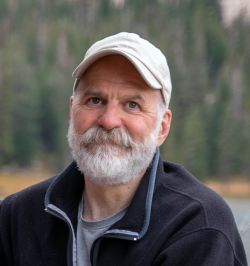
In day one's keynote the U.S. Geological Survey's Geoffrey Ellis' "Potential Synergies in Exploration for Natural Hydrogen and Helium" will discuss exploration for natural hydrogen has substantially increased in recent years due to its potential as a low-carbon energy resource to replace fossil fuels. Anecdotal reports suggest that there may be over 100 companies actively engaged in collecting data and acquiring acreage, with more than a dozen wells purported to have been drilled. The nascent stage of our understanding of the potential for natural hydrogen resources and the uncertainty related to the efficacy of exploration strategies contribute to a perception of high risk. Moreover, economic evaluation of natural hydrogen prospects is challenging and imprecise, which further contributes to uncertainty on the viability of potential targets. The potential for co-production of valuable commodities associated with natural hydrogen is generally viewed as an important factor for mitigating some of these risks.
One widely recognized potential candidate for co-production with natural hydrogen is helium. The decay of radiogenic minerals in crustal rocks is known to be a major source of helium. If water is present during this process, there is the potential for simultaneous production of hydrogen through radiolysis. Additionally, mantle derived fluids are capable of delivering helium to the Earth’s crust and may also contain substantial concentrations of hydrogen. Recent announcements by the company Gold Hydrogen of gases containing up to 95.8% hydrogen and as much as 36.9% helium in discrete gas samples from exploration wells in the Yorke Peninsula in South Australia have attracted substantial interest in the concept of co-production of natural hydrogen and helium. This presentation will discuss the concept of the hydrogen system, with its requisite components (i.e., source, reservoir, trap, etc.), and will highlight the specific areas that are directly applicable to helium exploration. The tools and strategies that may be applied in these exploration efforts will also be addressed, as well as the current knowledge gaps and opportunities for future advancements.
Geoffrey Ellis is a research geologist and the project chief of the Potential for Geologic Hydrogen Resources project within the Energy Resources Program (ERP) of the U.S. Geological Survey. He is also an affiliated faculty member in the Department of Geology and Geological Engineering at the Colorado School of Mines. He holds a bachelor’s degree in geological sciences from Cornell University, a master’s degree in geochemistry from the Colorado School of Mines, and a doctorate in marine geology and geophysics from the University of Miami. Prior to joining the ERP, he worked as a staff scientist in the Division of Chemistry and Chemical Engineering at the California Institute of Technology, as a research chemist in the Water Resources Division of the U.S. Geological Survey, and as a consultant in environmental and resource exploration geochemistry.
 Steven Tedesco
Day two will open with Steven Tedesco's "What Makes a Successful Helium/Hydrogen Prospect, Two Years Later" exploring what has happened in the industry since the 2023 North American Helium Conference Helium is more in similarities to a gold prospect, not an oil and gas prospect, in that the host gas is typically the gangue or waste rock in a mineral deposit. Many of these prospects fall by the wayside. As a result of the past two years of new activity the industry has a better handle (so we think) on helium systems. What matters in a successful helium prospect is the percentage of the element present relative to pressures and flow rates. Just like a petroleum prospect!! High helium percentage (generally >3.0%) play areas typically, not always, are significantly under pressure reservoirs and are found at generally less than 4,000 ft (1,212 m). The five fields or facilities that produce approximately 80% of the world helium is the South Pars, La Barge-Big Piney, the Hassi R’Mel in Algiers, Hugoton-Texas Panhandle and the Russian fields in the areas of Amur and Irkutsk (data is unreliable) vary from 0.04% to less than 1% on average. The helium from these five primary sources is extracted as a waste product and element of revenue opportunity rather than the primary production target. The biggest hurdle if not the major hurdle is the processing plant to extract helium or hydrogen. Funding for these facilities is difficult because of a history of some helium accumulations run out of the element after a few months of production, gas composition changes, and the biggest bogeyman of all, price drops. Hydrogen is in the early stages of exploration and potential a decade away from the first production of the element. Hydrogen has issues just as helium does as for example it cannot be transported far in its pure form. So, what makes a good helium/hydrogen prospect? It depends upon the many factors that will be discussed in this key note.
Dr. Steven A. Tedesco is Owner of Running Foxes Petroleum Inc.; Manager of MRE Wind and Solar; and Manager of Starfox Helium Inc. and has been in the resource industry for over 40 years. Dr. Tedesco has a MS from Southern Illinois University and a PhD from Colorado School of Mines. He has written numerous articles on coal, coal-bed methane, surface geochemistry, Pennsylvanian stratigraphy, numerous field studies, use of aeromagnetics in petroleum and resource exploration and gas operation. Dr. Tedesco recently authored the book: Geology and Production of Helium and Associated Gases published this spring by Elsevier and another book entitled Surface Geochemistry in Petroleum Exploration published by Chapman and Hall. Dr. tedesco is on the Foundation Board for Southern Illinois University. Dr. Tedesco operates over 600 CBM, oil (both conventional and waterflood) and gas wells in Utah, Missouri, Kansas, and Wyoming and has solar and wind assets in Arizona, Utah, Colorado, and New Mexico. Dr. Tedesco is a member of SPE, AAPG, RMAG, Emu Association, and National Buffalo Association.
Jeremy Jordan
The mid-day keynote with Jeremy Jordan, "Helium Project Development Hurdles: Midstream & Markets" will cover from concept to commercialization, getting new helium supplies to market can be an arduous journey. Similar to developing a hydrocarbon prospect, substantial geologic, geophysical, land, and permitting efforts are poured into making a project drillbit ready -- It isn’t unusual for years to go by between the time a concept is hatched and a rig appears on a well pad. Unfortunately, the discovery of a helium-bearing field typically doesn’t mark the end of the road. Often the midstream and downstream elements of a project entail additional levels of work – and time – that can be surprising to some developers.
There isn’t a “one size fits all” processing scheme for helium extraction and purification. Helium can be entrained in gas streams with diverse compositions, ranging from hydrocarbon-laden to totally inert. The makeup of a raw gas stream, along with other reservoir characteristics (e.g. wellhead pressure, deliverability, size, etc.), project location, ultimate development plans, availability of capital, and overall risk tolerance all play a role in the selection of the helium separation technology itself, as well as other midstream components of a project, such as gathering system design, and other gas processing and treating needs (e.g. NGL recovery, CO2 removal). Permitting requirements and timelines can vary by state, potentially further influencing technical decisions.
Helium offtake strategy plays a critical role in infrastructure planning. Since the most recent RMAG helium conference in 2023, the helium market has swung from one of general tightness to one of oversupply (at least as of the time of this publishing in November 2024). While helium is not a unique commodity in the sense that it is not impervious to market gyrations, helium pricing in North America has generally trended upward over the past decade. Given the relatively nascent nature of the North American upstream helium industry, the current pricing environment (a buyer’s market as opposed to a seller’s market) is unfamiliar territory for many helium developers.
Drawing on experience derived from over 17 years of developing projects with IACX Energy, the speaker will cover the interrelated topics referenced above, with a particular emphasis on helium separation technologies, overall project-related midstream challenges, and the impact of downstream marketing on helium project development.
Jeremy Jordan has 25 years of combined experience in the energy and investment banking industries. Prior to forming Jordan Development Solutions in January 2025, Mr. Jordan was a co-founder of IACX, where he predominantly focused on the company’s commercial efforts. Some of his strengths include: identification, structuring, and negotiation of greenfield projects and asset acquisitions; product marketing, including residue gas, NGLs, and helium; gas supply; and overall development of complex, helium-centric natural gas projects. Prior to starting IACX, he worked as an advisor to private and public companies seeking institutional financing. Mr. Jordan holds a Bachelor of Business Administration with a concentration in Finance from Southern Methodist University.
 Allegra Hosford Scheirer
To close out the conference Allegra Hosford Scheirer will present "Geologic and Strategic Insights Reveal the State of Play in the Natural Hydrogen Industry". Covering the natural hydrogen community has grown significantly over the past couple of years, with a handful of established companies and over 60 startups currently exploring for this tiny molecule worldwide. In this talk, we present geologic and strategic insights into the present and future state of this new subsurface energy resource. For example, most companies appear to be chasing natural hydrogen that was produced from the serpentinization of ultramafic rocks (primarily mantle peridotite). This explains the focus on the Midcontinental Rift in the United States and the foothills of the Pyrenees Mountains in France. Other companies, however, are pursuing hydrogen that was generated from the radiolysis of water. Example exploration regions are the cratons of Canada and Australia, where ancient rocks are rich in radioactive elements. Our global map will share our knowledge of where companies are exploring for hydrogen…and why. In so doing, we will demonstrate the utility of our custom AI tool for research and analysis of natural hydrogen exploration.
Switching gears to the business side of the equation, we will discuss the numerous factors affecting investment in this space: what constitutes an economic accumulation of hydrogen? What is a suitable flow rate? Why are helium companies beginning to explore for hydrogen and vice versa? Where does the mining industry fit in? This section of the talk will feature our proprietary hydrogen lifting cost tool, which not only provides critical information to prospective investors, but also aids companies to minimize their cash burn rate. Finally, a custom prospect and uncertainty evaluation tool marries the geologic factors with the economic ones to help explorers maximize their chance of success.
Allegra Hosford Scheirer is an interdisciplinary geoscientist specializing in natural hydrogen exploration, basin and petroleum system modeling, CCUS, and geothermal energy. With experience spanning government (USGS), academia (Stanford University), and industry, her work focuses on unraveling the fundamentals of rock-fluid interactions to optimize exploration activities and de-risk energy investments. After 16 years at Stanford, Allegra now works as a full-time consultant helping companies worldwide to unlock Earth resources for a secure energy future. She also designs and leads custom short courses and field trips, offering tailored training for industry professionals on hydrogen systems, petroleum geology, and carbon capture strategies. Allegra brings strategic leadership to petroleum exploration in Alaska as an independent director at Pantheon Resources. Her geophysics degrees are from Brown University (B.S.) and MIT (Ph.D.).
Have a questions? Want to get involved? Email heliumconference@rmag.org

| More Information | |||
|
|
||
|
|
||
|
|
||
| Questions? Contacts us here or by email at heliumconference@rmag.org. | |||